Study in Canada
Canada pairs globally ranked universities with one of the most predictable, transparent immigration systems for international students — a post‑graduation work permit of up to three years, affordable tuition next to the US and UK, and campuses spread across cities built around exactly the kind of safety and multiculturalism most applicants ask us about first.
The essentials
Why students pick Canada over other destinations
Post‑Graduation Work Permit (PGWP)
Work permit length matches your program length, up to 3 years — no employer sponsorship needed, and PGWP time counts toward permanent residency.
Lower cost than the US or UK
Average tuition runs 25–40% below comparable US programs, with public healthcare access in most provinces once enrolled.
Work rights while studying
Up to 24 hours a week off‑campus during term, and unlimited hours during scheduled breaks, for most study permit holders.
Pathway to permanent residency
Express Entry and Provincial Nominee Programs give Canadian graduates a direct, points‑based route to PR — no lottery involved.
Language requirement
IELTS, PTE and other accepted English proficiency exams
Every Designated Learning Institution (DLI) sets its own minimum, but these bands cover what most diploma, bachelor's and master's programs ask for — and what the Student Direct Stream (SDS) visa category will accept.
| Exam | Diploma / UG minimum | Postgraduate minimum | Validity |
|---|---|---|---|
| IELTS Academic | 6.0 overall, no band under 5.5 | 6.5 overall, no band under 6.0 | 2 years |
| PTE Academic | 58–60 overall | 65–68 overall | 2 years |
| TOEFL iBT | 80–83 overall | 90–100 overall | 2 years |
| Duolingo English Test | 105–110 overall | 120–125 overall | 2 years |
| CAEL / CAEL CE | 60 overall | 70 overall | 2 years |
| CELPIP General | Not for admission — used for PR / immigration applications | — | 2 years |
SDS visa applications currently accept IELTS Academic and PTE Academic results only — TOEFL and Duolingo scores still work for admission but route through the slower regular study permit stream. Score requirements above are typical ranges; always confirm the exact cutoff on your offer letter, since competitive programs (engineering, business, nursing) often ask half a band higher.
After you graduate
Permanent residency pathways for international graduates
A study permit is rarely the end goal — most applicants we work with are studying in Canada because of what it unlocks afterward. These are the four routes graduates actually use.
| Pathway | Who it suits | Typical timeline | Key requirement |
|---|---|---|---|
| Express Entry — Canadian Experience Class (CEC) | Graduates with 1+ year of skilled Canadian work experience post‑PGWP | 6–8 months once invited | CRS score, CLB 7 (or CLB 5 for NOC TEER 4/5 roles) |
| Provincial Nominee Program (PNP) | Graduates of a specific province who plan to stay and work there | 8–19 months, varies by province | A provincial nomination adds 600 CRS points |
| Atlantic Immigration Program (AIP) | Graduates with a job offer in NS, NB, PE or NL | ~7 months | Employer‑driven, no CRS pool needed |
| Rural and Northern Immigration Pilot (RNIP) | Graduates settling in a participating smaller community | ~15–19 months | Community‑specific job offer and settlement plan |
Every one of these routes still checks your language test score against the Canadian Language Benchmark (CLB) — not your university's admission score — which is why the exam you sit for PR later can differ from the one you used to get your study permit. See the conversion table below.
The exam nuance most applicants miss
Which language scores actually count toward PR
IRCC does not accept every version of every test for immigration. For Express Entry and most PNPs, only the General (not Academic) versions convert to a Canadian Language Benchmark (CLB) level.
| CLB level | IELTS General Training | PTE Core | CELPIP General | TEF Canada (French) |
|---|---|---|---|---|
| CLB 10 | 8.0+ | 86+ | 10 | 371+ |
| CLB 9 | 7.0 | 73–85 | 9 | 349–370 |
| CLB 8 | 6.5 | 67–72 | 8 | 334–348 |
| CLB 7 | 6.0 | 60–66 | 7 | 309–333 |
| CLB 5–6 | 5.0 – 5.5 | 50–59 | 5–6 | 226–274 |
Two things trip people up every year: (1) IELTS Academic and PTE Academic — the versions almost everyone takes for admission — are not the versions IRCC scores for Express Entry; you need IELTS General Training or PTE Core instead. (2) CLB 7 across all four bands is the line for most skilled‑worker categories, so scoring 6.5 in one band while averaging 7 overall can still disqualify a profile.
Our recommendation
Which exam should you actually take?
Based on what we see work for students with different end goals — pick the row that matches your plan, not just the test your friends took.
Studying only, fastest visa — take PTE Academic
If your only goal right now is landing on campus, PTE Academic is scored by AI within 48 hours (versus up to 13 days for IELTS), it's on the SDS‑accepted list, and its scoring rewards clear typing speed over spoken‑exam nerves — the single fastest route from booking to offer letter.
Studying now, planning PR later — take IELTS General Training twice
Because IELTS Academic doesn't convert to a CLB score, students set on staying long‑term are better off sitting IELTS General Training for the study permit itself where the institution allows it, or budgeting for a second General Training sitting closer to graduation — it avoids paying for and studying toward two different exam formats.
Strong speaker, weaker writer — take CELPIP General
CELPIP is Canadian‑built, uses Canadian English and spelling throughout, and its speaking section is noticeably more conversational than IELTS's — a better fit for students who test well verbally but find IELTS's academic essay format stressful. It's also accepted directly for Express Entry with no conversion needed.
Applying to Quebec or a French‑medium program — take TEF Canada or TCF Canada
Quebec's own selection system (Arrima) and several federal PR streams award extra CRS points for French, on top of English — TEF Canada is the more widely recognised of the two French tests and pairs well with an Université de Montréal or Quebec City application.
Where to apply
Top 10 universities in Canada for international students
Ranked by a blend of global standing, employer reputation and how well each campus supports incoming international students.

University of Toronto
Canada's top‑ranked university overall, with unmatched research output and a downtown campus embedded in the country's largest job market — the natural first choice for students who want name recognition and co‑op access at once.

McGill University
Often called "the Harvard of the North," McGill draws a heavily international student body into a bilingual city where English‑taught programs sit alongside a distinctly European campus culture.

University of British Columbia
A Pacific‑facing campus with strengths in forestry, environmental science and business, plus the shortest flight time back to South and East Asia — a major draw for students weighing travel costs.
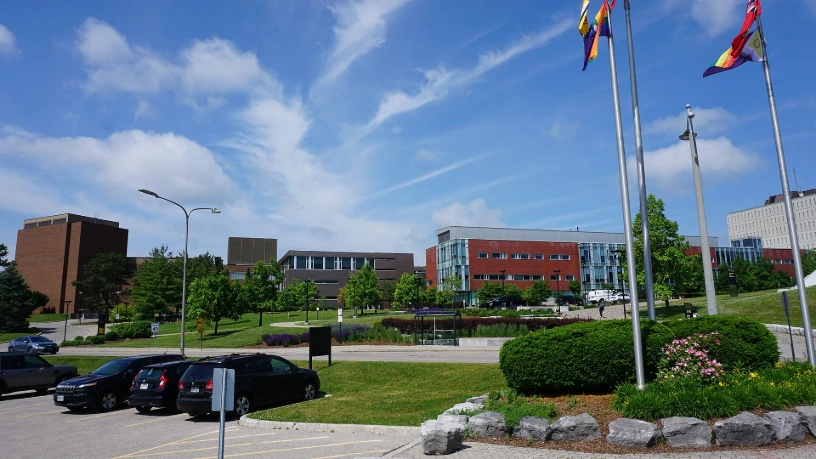
University of Waterloo
Canada's co‑op powerhouse: the largest work‑integrated learning program in the world feeds directly into the Kitchener‑Waterloo tech corridor, making it the top pick for computer science and engineering applicants.

University of Alberta
Strong in energy engineering, agriculture and health sciences, with tuition and living costs noticeably lower than the Toronto or Vancouver campuses on this list.
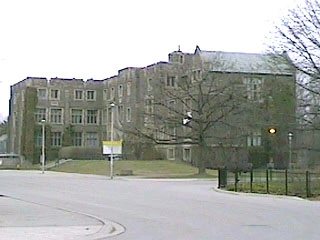
McMaster University
Best known for its problem‑based medical program and health sciences research, an hour from Toronto without the capital‑city cost of living.

Queen's University
A small, close‑knit undergraduate experience with one of the strongest business schools (Smith School of Business) in the country and high graduate employment rates.
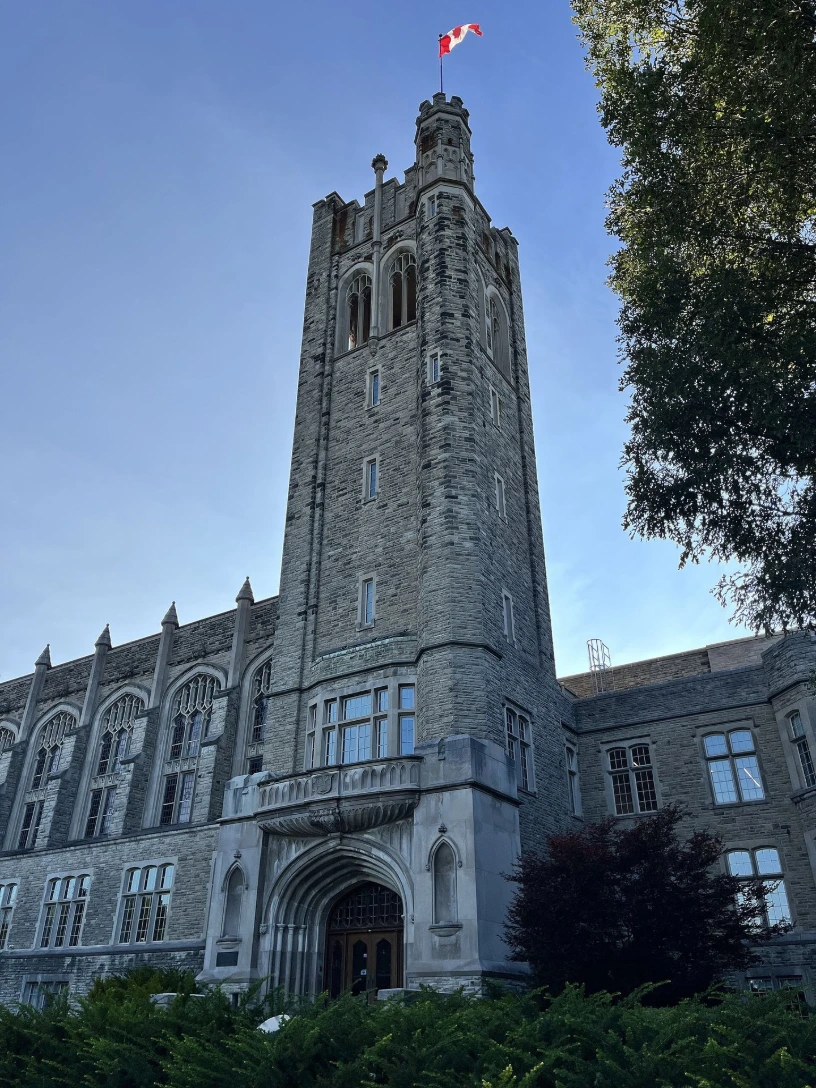
Western University
Home to the Ivey Business School, one of Canada's most recruited‑from MBA programs, on a residential campus in a mid‑size, low‑cost city.

University of Ottawa
The world's largest bilingual (English–French) university, with a location that puts government, policy and public‑service internships within walking distance of campus.

Université de Montréal
Canada's largest French‑language research university, ideal for students who want to add fluent French to their degree while studying in a major global city.
Where to live
Top 10 cities for international students
Every city below is ranked with student budgets, part‑time job markets and community size in mind — not just tourist appeal.

Toronto
Canada's largest job market and most diverse city — every major bank, tech office and consulting firm has a Toronto presence, which matters enormously once your PGWP clock starts running.

Vancouver
Mild winters, mountains and ocean on the same commute, and the shortest flights to Asia — offset by the highest rent of any Canadian city, so budget accordingly.

Montreal
The lowest cost of living among Canada's big cities, a legendary student nightlife scene, and three major universities within a 20‑minute metro ride of each other.

Calgary
No provincial sales tax and some of the highest average incomes in Canada — a strong pick for business, energy and engineering students planning to work locally after graduation.

Ottawa
Canada's capital, with a stable government‑anchored job market, a manageable size, and rent well below Toronto or Vancouver for a comparable quality of life.

Edmonton
One of the most affordable major cities on this list, with a growing tech and health sciences scene alongside its traditional energy‑sector employers.

Quebec City
A walkable, French‑speaking UNESCO World Heritage old town — the pick for students who want full immersion in French alongside a genuinely low cost of living.
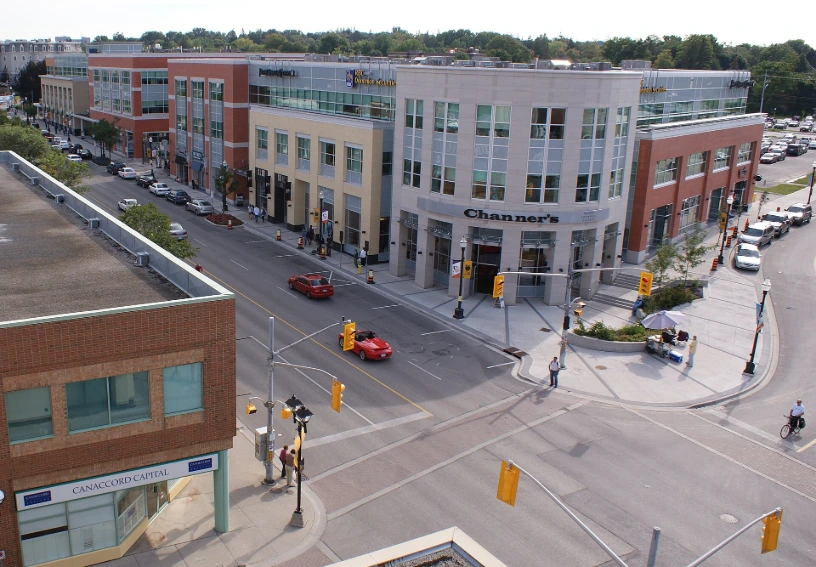
Waterloo
A compact university town that punches far above its size on tech hiring — BlackBerry, Google and dozens of startups recruit locally, and rent is a fraction of Toronto's.

Halifax
Canada's east‑coast hub, with a close‑knit international student community, harbour‑side living, and noticeably lower rent than any city further west on this list.

Winnipeg
The most budget‑friendly city in this list by a wide margin, with a Provincial Nominee Program that's historically been faster and more accessible for graduates seeking PR.